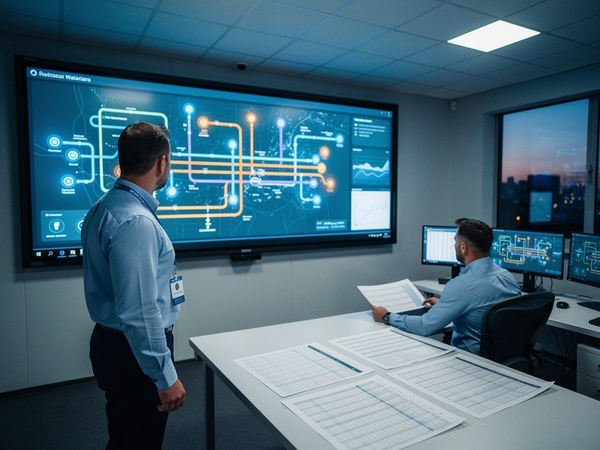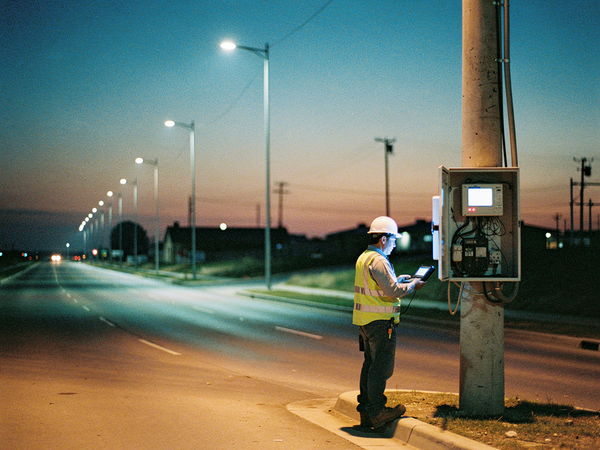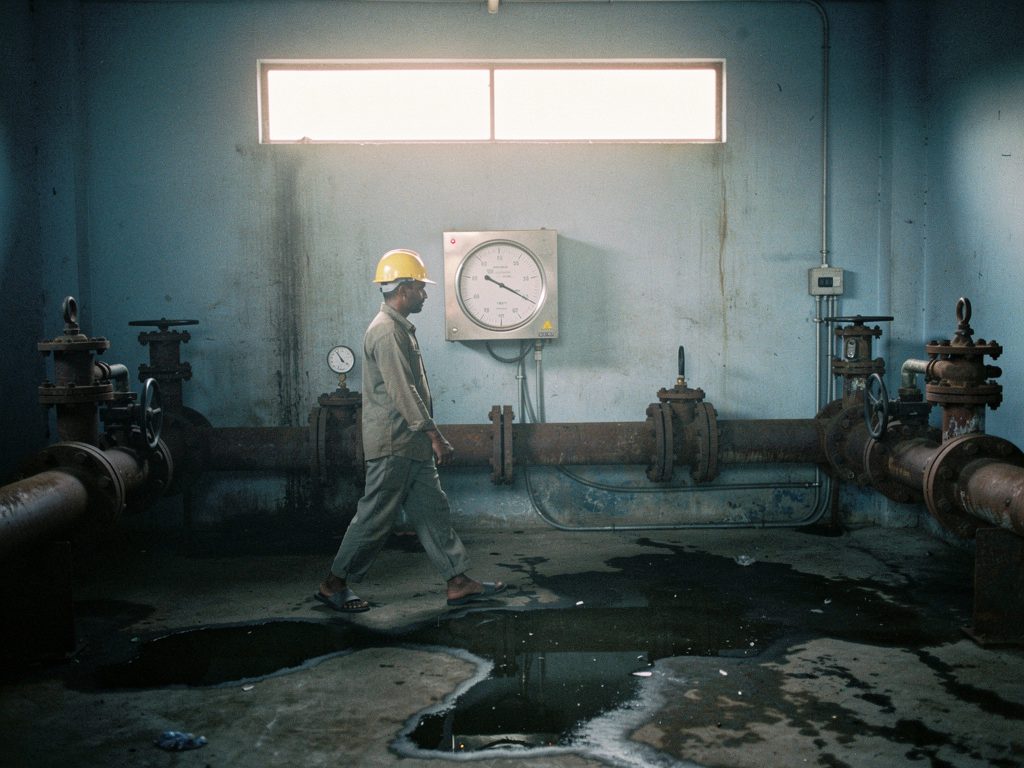
A municipal water utility in a Smart City Mission city installed ultrasonic flow meters at 37 district metered area inlets. The meters transmit readings to the integrated command and control center every 15 minutes. The control center dashboards display live flow data on a large video wall. No action is taken on that data because the utility has no standard operating procedure for what constitutes an actionable alarm. The result is a room full of screens showing real-time information that nobody uses to shut a valve, dispatch a crew, or adjust a pressure setting. This is the single most instructive failure of the Smart Cities Mission: the funding procured instrumentation but did not build the operational discipline that makes instrumentation valuable.
What the Smart City Mission Funded and What It Was Designed to Accomplish
The Smart Cities Mission allocated public funds across 100 selected cities with a stated objective of creating replicable models for urban development. The funding fell into three broad categories: area-based development that retrofitted existing neighbourhoods, pan-city solutions that deployed information technology across municipal services, and governance improvements that digitised citizen interactions. The operational premise was that real-time data from sensors, combined with integrated command and control centres, would enable faster response to infrastructure failures and more efficient resource allocation.
In practice, the largest share of investment went toward citizen service infrastructure, particularly integrated command and control centres with video walls, surveillance cameras integrated with police networks, and citizen-facing mobile applications. Water and energy monitoring components were included in most city proposals but received a fraction of the total budget. A typical smart city water component funded 15 to 30 flow meters at zone boundaries, replaced a few pump house panels with programmable logic controllers, and installed a handful of pressure transducers at treatment plant outlets. The sensor density was too low to isolate leaks within a zone, and the data flow terminated at a dashboard rather than a decision.
Integrated Command Centres Produced Video Feeds, Not Operational Response
The signature output of the Smart Cities Mission is the integrated command and control center - a large room filled with video wall screens divided into quadrants showing traffic cameras, solid waste vehicle tracking, water tanker GPS positions, and weather radar. The operator sitting at the central console can see the location of every municipal vehicle and every water quality parameter for the past 24 hours. What the operator cannot do is dispatch a crew to the correct valve chamber within 15 minutes of a pressure drop because the system does not correlate the pressure reading with the specific zone boundary or the nearest isolation valve location.
The gap is not technical. The sensors exist, the telemetry works, and the data reaches the control center. The gap is operational: the cities did not map sensor locations to valve numbers, did not train control center staff to interpret rate-of-change plots, and did not define alarm thresholds that distinguish a pump trip from a main burst. Without these operational definitions, the command center becomes a passive monitoring station that records failures after they occur rather than an active response hub that intervenes while a failure is developing. The operator sees the reading and cannot act on it because acting requires a separate set of decisions that were never integrated into the system design.
What the Smart City Water and Energy Components Actually Included
The typical smart city water monitoring component specified flow meters at bulk supply points, pressure sensors at treatment plants and major distribution nodes, and water quality analysers at a limited number of consumer tap points. The energy component specified feeder-level energy meters at substations, voltage regulators at distribution transformers, and a central energy management dashboard. Both components shared a common design flaw: they measured at the boundary of the system rather than inside the system. A flow meter at the DMA inlet tells the utility how much water entered the zone. It does not tell the utility how much water reached the farthest consumer, where the leak is located within the zone, or whether the night minimum flow is rising over a three-week period.
The monitoring architecture assumed that boundary measurements plus a command center display would suffice to identify and locate failures. In practice, a rising night minimum at a single zone inlet indicates that a leak exists somewhere in a network that may contain three to five kilometres of pipe. The utility still needs to deploy listening sticks or conduct step testing to locate the leak. The sensor data shortened the detection time from weeks to hours, but it did not reduce the total effort required to find and fix the leak. Cities that understood this limitation designed their monitoring programs to include sub-zonal metering, pressure logging at multiple points within each zone, and automated correlation between pressure drop events and valve positions. Cities that did not understand the limitation ended up with 15 minutes of data and no faster repair cycle than before.
How Cities That Combined Infrastructure with Monitoring Produced Different Outcomes
A small number of smart cities treated the monitoring investment as an operational transformation program rather than a hardware procurement exercise. In one city, the water utility installed pressure loggers at 120 locations across four zones, with the loggers set to record at one-minute intervals during low-flow periods and five-minute intervals during peak hours. The utility also created a standard operating procedure that required the night duty engineer to review the past 72 hours of pressure data every morning and flag any zone where the minimum night pressure had dropped more than 0.2 bar compared to the same day the previous week. Within six months, the utility identified three developing leaks that had not yet surfaced, repaired them at scheduled rather than emergency labor rates, and reduced the total unaccounted-for-water volume by an estimated six percent measured against the previous year’s average night minimum.
The contrast with cities that did not implement operational monitoring is instructive. Those cities received the same hardware budget and installed similar sensor counts. But without the morning data review, without the alarm threshold definitions, and without the duty engineer assigned to interpret pressure trends, the sensors functioned as expensive data archives. The data sat on servers and was accessed only when a major failure occurred, at which point the historical readings confirmed what the field crew already knew: the pressure had been dropping for days. The delay between sensor installation and operational action was not a technology delay; it was an organisational delay that the Smart Cities Mission program structure did not address.
What the Next Phase of Urban Infrastructure Investment Needs to Prioritize
The next round of urban infrastructure funding, whether through the AMRUT 2.0 program or a subsequent smart city initiative, needs to shift focus from sensor density to operational decision density. A city that installs 50 flow meters without defining a leak response protocol will achieve less than a city that installs 15 flow meters but trains its field crew to conduct a weekly zone-by-zone night flow analysis. The required shift is from asking how many sensors were procured to asking what operational decisions are now possible that were not possible before.
Those decisions include: which valve to close when a pressure drop is detected, which crew zone to dispatch based on the time-stamped correlation of pressure events, which pump to take offline when the flow-to-pressure ratio deviates from the historical curve, and which consumer meters to prioritize for replacement when the zone-level night flow exceeds the calculated legitimate night consumption. Each of these decisions requires not just a sensor reading but a decision rule that maps the reading to a specific action. Cities that build their monitoring programs around decision rules will close the gap between instrumented infrastructure and operational improvement. Cities that continue to procure sensors without decision rules will continue to operate command centres that display real-time data and respond to failures only after the public complains.