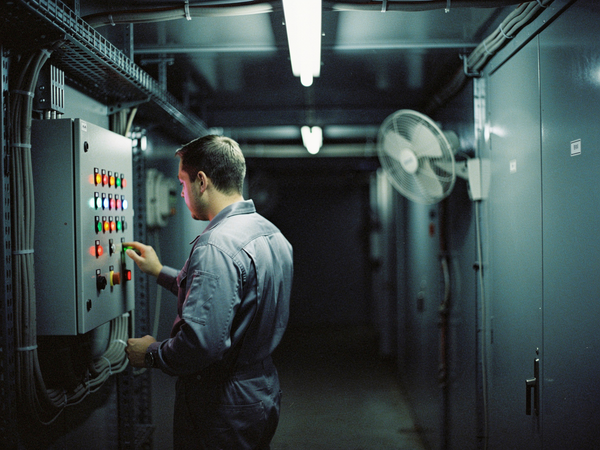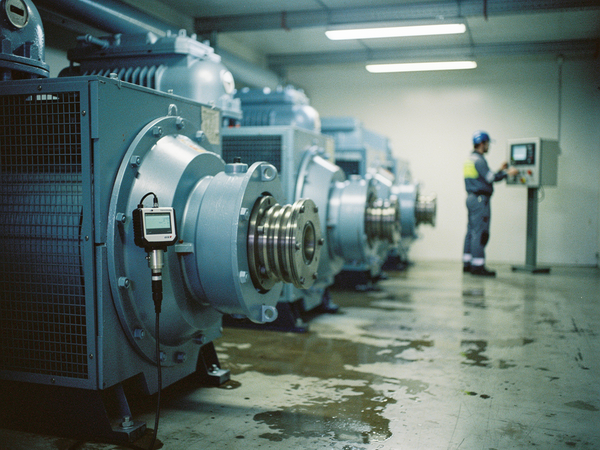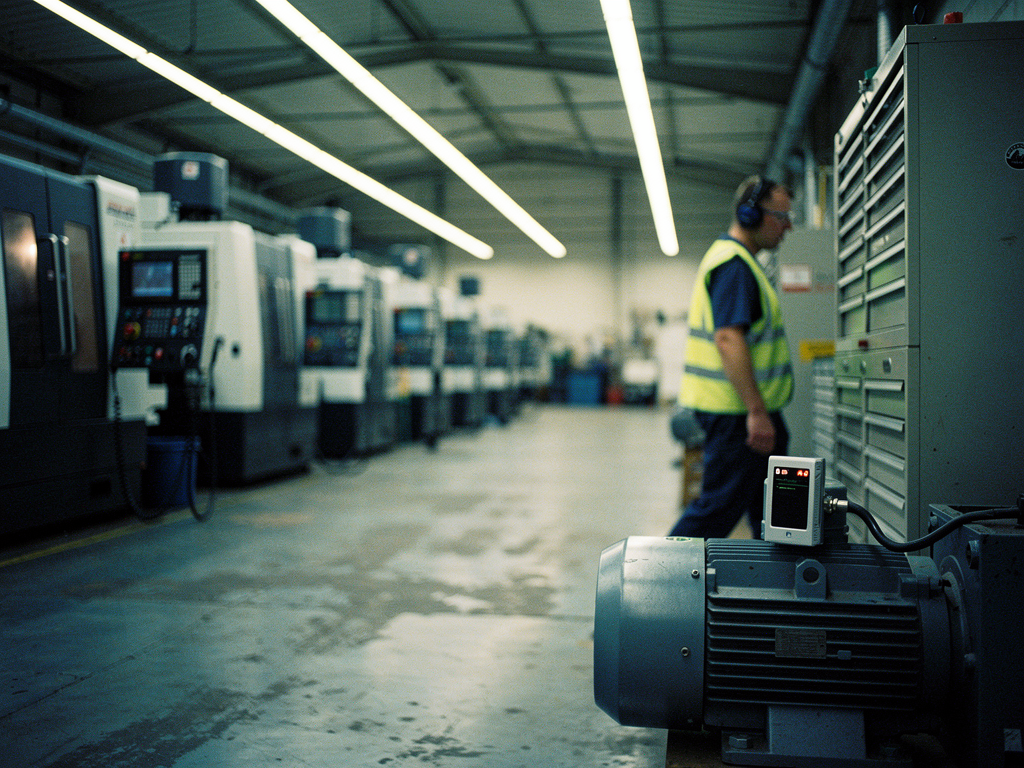
A textile plant in an Indian industrial estate installed vibration sensors on twelve critical motors eight months ago. The maintenance head still cannot tell you whether those motors are degrading. The sensors transmit data, the dashboard shows waveforms, and the system has generated forty-seven alerts. None of those alerts led to a confirmed bearing fault. Two motors failed anyway-one with a seized bearing, one with a rotor bar fracture. The vibration data from the night before each failure looked identical to the data from the previous six months. This is not a sensor problem. It is a data continuity problem. The plant had no operating history before the sensors were installed, no baseline for what normal vibration looks like at different load conditions, and no correlation between vibration readings and the actual production cycles that drive those loads. The monitoring system is producing data. It is not producing predictive insight.
Baseline Absence Makes Anomaly Detection Unreliable
Every predictive maintenance algorithm depends on a statistical model of normal equipment behavior. That model requires a continuous operating history that captures the full range of conditions the machine experiences-startup transients, steady-state running at different loads, shutdown sequences, and the gradual drift of parameters over weeks and months. In Indian manufacturing, the typical machine that receives a predictive maintenance retrofit has been running for years without any systematic data collection. The only records are maintenance logs that note when a part was replaced or a breakdown occurred. There is no digital record of what the machine looked like when it was healthy.
When a plant installs sensors on a machine with no historical baseline, the system begins building its model from the moment the first data point arrives. That first data point captures the machine's current condition, which may already be degraded. The system treats that degraded state as normal. A bearing that has already lost twenty percent of its useful life becomes the baseline. Subsequent readings that show further degradation are flagged as anomalies only when the deviation exceeds a statistical threshold calculated from the same degraded data. The result is a system that misses early-stage failures because it has no reference for what healthy actually looks like. The plant manager sees a green dashboard and assumes the machine is fine. The bearing fails three months later.
Continuous Operating History Is What Separates Condition Monitoring from Predictive Maintenance
Condition monitoring tells you the current state of a machine. Predictive maintenance tells you when that state will cross a failure threshold. The difference is a continuous time series of measurements taken at intervals short enough to capture the rate of change. A vibration reading taken once per shift tells you whether the machine is vibrating more than it did during the previous shift. It does not tell you whether the vibration amplitude is accelerating, decelerating, or following a seasonal pattern tied to ambient temperature or production load. A once-per-shift reading can miss a bearing fault that develops over a weekend when the machine is running a different product batch at a different speed.
The Indian plants that have built successful predictive maintenance programs did not start with analytics. They started with continuous data collection at intervals of fifteen minutes or less, maintained without gaps for a minimum of three to six months before any predictive model was deployed. During that period, the data was used only to establish baselines-what does normal vibration look like at full load, what does normal current draw look like during a cold start, what does normal temperature rise look like over a twelve-hour shift. Only after the baseline was established did the plant begin applying statistical models to detect deviations. The plants that skip this step, and most do, end up with condition monitoring dashboards that generate alerts but no actionable predictions.
Siloed Measurements Cannot Diagnose the Root Cause of a Deviation
A single vibration sensor mounted on a motor bearing housing can detect that the vibration amplitude has increased. It cannot tell you why. The increase could be a bearing fault, a misalignment, an unbalance, a resonance condition, or a change in the driven load. Each of these failure modes produces a different frequency signature, but frequency analysis alone is unreliable when the machine operates at variable speed or when the sensor is mounted on a structure that amplifies certain frequencies. To distinguish between failure modes, the vibration data must be correlated with other measurements-motor current, temperature, speed, and process parameters such as flow rate or pressure.
In most Indian manufacturing plants, these measurements are collected by separate systems installed by different vendors at different times. The vibration monitoring system is a standalone unit. The motor protection relay records current data but stores it in a proprietary format. The PLC that controls the production process logs speed and load data but only retains the last forty-eight hours of history. The maintenance team has no way to correlate a vibration spike with a simultaneous current surge or a load change because the data lives in three different systems with three different time stamps and three different retention policies. A predictive model that requires correlated inputs cannot function under these conditions. The plant has sensors. It does not have a monitoring system.
Maintenance Event Records Must Be Integrated with Sensor Data for Models to Learn
Predictive models do not learn from sensor data alone. They learn from the relationship between sensor data and actual outcomes. A model needs to know that on a specific date, at a specific time, a specific bearing was replaced, and that the sensor data leading up to that replacement showed a specific pattern. Without this feedback loop, the model cannot distinguish between a sensor reading that indicates a developing fault and a sensor reading that is simply noise. The model generates predictions, but there is no way to validate whether those predictions are correct because the maintenance records are kept in a separate logbook or spreadsheet that is never reconciled with the sensor data.
A plant in an Indian industrial zone operated a compressor that had been flagged by its vibration monitoring system as showing elevated readings for three consecutive weeks. The maintenance team inspected the compressor, found no visible damage, and cleared the alert. The compressor failed two weeks later. When the failure was investigated, the team discovered that the elevated readings had been caused by a loose mounting bolt, not a bearing fault. The model had no way to learn this distinction because the maintenance event-the inspection and the finding of a loose bolt-was recorded in a paper log that was never entered into the monitoring system. The next time a similar vibration pattern appeared, the model would again flag it as a bearing fault, and the team would again inspect and find nothing. The model never improves because it never receives feedback on its predictions.
Condition Monitoring Systems Generate Alerts. Predictive Maintenance Generates Lead Times.
The operational difference between condition monitoring and predictive maintenance is measurable in lead time. A condition monitoring system alerts you when a parameter crosses a fixed threshold. That threshold is typically set high enough to avoid false alarms, which means the machine is already in a degraded state when the alert triggers. The lead time between the alert and the failure may be hours or days, not weeks or months. A predictive maintenance system, by contrast, alerts you when the rate of change of a parameter indicates that the parameter will cross the failure threshold at a future date. The lead time is determined by the slope of the degradation curve, not by the position of a fixed threshold.
In practice, this means that a plant with condition monitoring can avoid catastrophic failures but cannot plan maintenance activities efficiently. The maintenance team receives an alert and must respond immediately because the lead time is short. The plant must carry spare parts for every critical machine because there is no advance warning of which machine will fail next. A plant with genuine predictive maintenance knows two weeks in advance that a specific bearing will need replacement during the next scheduled shutdown. The spare part is ordered, the maintenance crew is scheduled, and the production plan is adjusted. The machine does not fail unexpectedly. The maintenance cost is lower because the work is planned rather than reactive. The difference is not in the sensor technology. It is in the data foundation that supports the predictive model.
Data Continuity Must Precede Analytics Investment
The plants that have successfully implemented predictive maintenance in India share a common pattern. They did not start by purchasing analytics software or hiring data scientists. They started by fixing the data pipeline. They installed sensors that transmit data at intervals of fifteen minutes or less. They ensured that the data is stored in a single time-series database with a consistent time stamp across all measurement points. They integrated the sensor data with the maintenance management system so that every repair event is recorded alongside the sensor readings that preceded it. They collected data for a minimum of three months before any predictive model was deployed. Only after the data foundation was solid did they begin applying statistical models.
The plants that skip this sequence-and they are the majority-end up with expensive monitoring systems that generate data but no insight. The sensors are installed, the dashboards are built, and the alerts are configured. But the alerts are unreliable because there is no baseline. The predictions are inaccurate because the data is siloed. The models never improve because there is no feedback loop. The maintenance team loses confidence in the system and stops paying attention to alerts. The investment in predictive maintenance becomes a sunk cost, and the plant returns to reactive maintenance. The technology is not the problem. The data foundation is.
Talk to Olectr about building a continuous monitoring foundation that gives your predictive maintenance program the data it actually needs to work.